I am
a UX/UI Designer.
a Visual Designer.
a User Researcher.
a Frontend Developer.
an Experience Designer.
(I turn lovely ideas into great experiences.)
UX Design: Concept sketches > Wireframes > Hi-fi Mocks > Prototyes. Information Architecture, Interaction Design, User Flows, Site Maps, System Maps, Layout, Messaging and Copy, UX Artifacts (Empathy maps, Affinity Maps, Concept Diagrams, Experience Journeys etc.)
Visual Design: Style Guides, Web and Mobile Design, Photoshop, Illustrator, Branding Concepts, Logos, and Identity, Look and Feel, Iconography and UI, Color Theory, Visual Hierarchy, Typography, Photography and Video
User Research: Competitive Analysis, Design Pattern Research, User Research, Contextual Inquiry, Quantitative Analysis, Card Sorting, User Interviews, User Personas, A/B Testing, User Scenarios, User Journeys, User Surveys, Usability Testing
Frontend Development: Responsive Web Development, HTML5, CSS3, Javascript, Git, Bootstrap, Wordpress, SEO'd, Universal Access (Accessible)


Tools
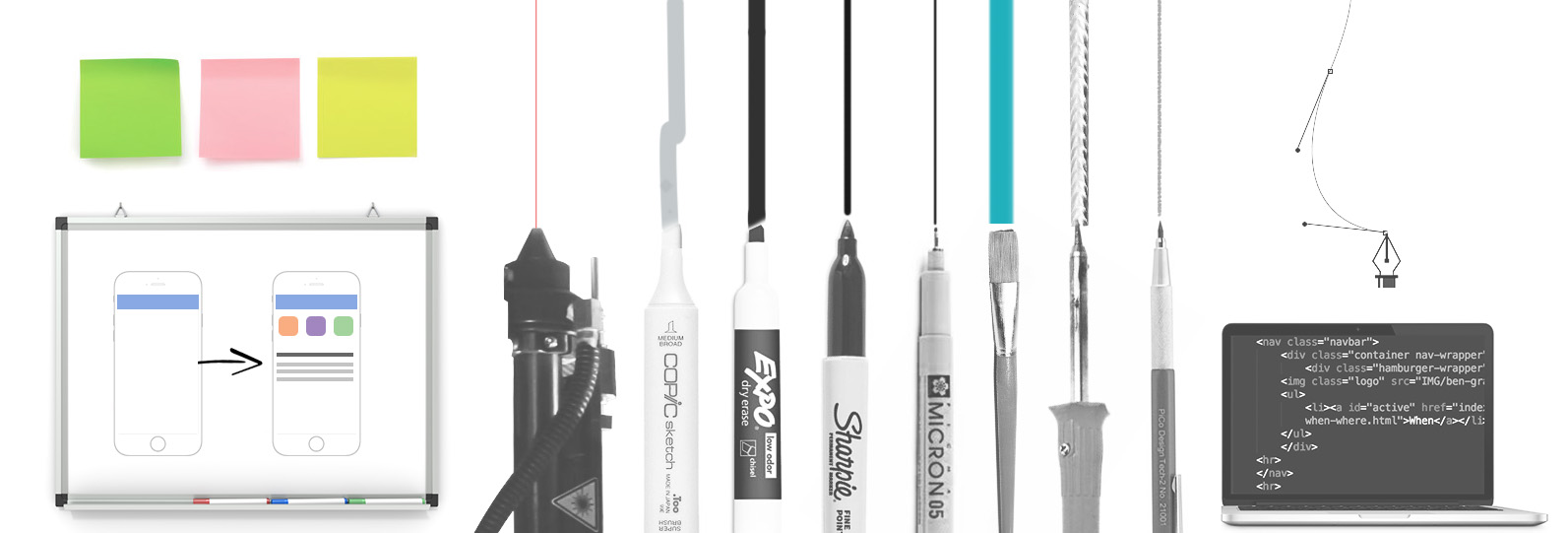
- Concept & Lo-fi: Whiteboards, Sticky Notes, Pen and Paper, Paper prototype.
- Prototype & Hi-fi: Sketch, Illustrator, Photoshop, InVision.
- Other tools: Omnigraffle, Keynote.
- Build: Sublime Text, Git, Lasercutter, CNC Mill, 3D printer.
Methodology

Double-Diamond Methodology, Human-Centered Design, Design Thinking, Collaborative/ Participatory Design, Lateral Thinking, Rapid Iteration and Prototyping, Constant Feedback and Usability Testing, Agile/ Lean UX
- Test early, test often.
- Build, measure, learn.
- Ideate, iterate, test, repeat.
Process
I follow the Double-Diamond Methodology, which starts with exploration and research. First we ask, “What are we trying to solve?”, “Is this the best method to solve this problem?”, and “Are we sure this is the users' problem?.” The more you research your users to better understand a day in their shoes, the more empathetic you'll be to fully understand a day in their life and their needs. The problem the client or user thinks they have isn't always the actual issue so we constantly ask “Why?” to drill deeper. After interviewing potential users, gathering data, and creating insights, we create a hypothesis on what the central problem is. We also ask “Who else has solved this problem?” and “How successful have their approaches been?”
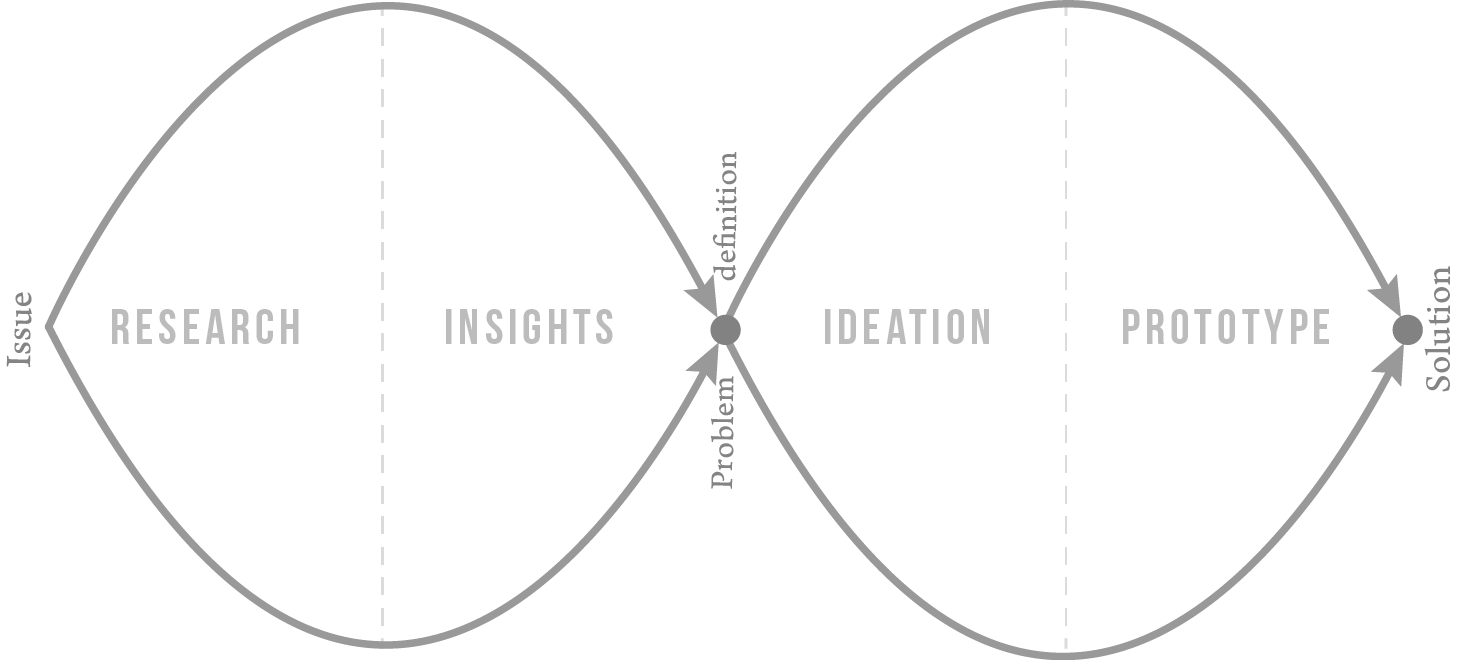
Next, in the ideation stage we go wide, coming up with sometimes absurd ‘outside the box’ sorts of ideas. After ideating, we prune down and latch on several core approaches, letting only the best ideas come through. From here, we develop a prototype and start testing against a whole range of potential users, ensuring the solution makes sense to a wide audience. Lastly, we can start engineering and building, continuing to work out usability issues, incorporating regular feedback, and squashing bugs in the experience and the code.